Buy möpse.net ?
We are moving the project
möpse.net .
Are you interested in purchasing the domain
möpse.net ?
domain@kv-gmbh.de · 0541-91531010
Buy möpse.net ?
How can one convert acceleration to Earth's acceleration?
To convert acceleration to Earth's acceleration, one can simply divide the given acceleration by the acceleration due to gravity on Earth, which is approximately 9.81 m/s^2. This will give the acceleration in terms of how many times Earth's gravity it is. For example, if a car is accelerating at 5 m/s^2, dividing this by 9.81 m/s^2 will give approximately 0.51 g, where g represents Earth's acceleration due to gravity. **
How can one convert acceleration to Earth acceleration?
To convert acceleration to Earth acceleration, one can use the formula: Earth acceleration = acceleration / 9.81 m/s^2. This formula is derived from the fact that Earth's gravitational acceleration is approximately 9.81 m/s^2. By dividing the given acceleration value by 9.81 m/s^2, one can determine how many times greater or smaller the acceleration is compared to Earth's gravitational acceleration. This conversion is useful for comparing accelerations in different contexts to the standard acceleration due to gravity on Earth. **


Similar search terms for Acceleration
Top-Angebote
Products related to Acceleration:
-
From You Flowers Serenity and Bliss BouquetA simple way to express you love without saying anything, this arrangement is sure to do the trick. The white and pinks of this bouquet are exquisite, without being overstated. The roses and lilies complement each other, surrounded by other pastel...35,99 $*Shipping: 14,99 $Secure redirect to the provider
-
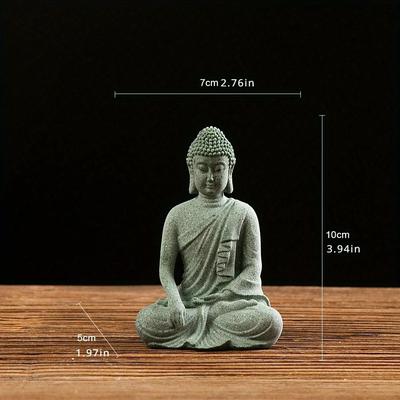
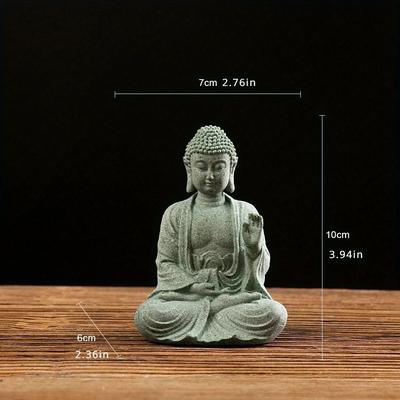
Inspired Living Zen Serenity Mini Buddha Aquarium Statue Green Sandstone Zen Fish Tank Decor zen SittingThis peaceful green sandstone Buddha figurine transforms any aquarium, desktop, or garden nook into a haven of calm and mindfulness. Designed for aquarists, home decorators, and anyone longing for quiet moments, the ZenSerenity Mini Buddha Aquarium...33,97 $*Shipping: 0,00 $Secure redirect to the provider



-
How can one escape from wanderlust?
One way to escape from wanderlust is to find a balance between satisfying the desire for adventure and the need for stability. This can be achieved by setting aside time for regular travel or exploration while also creating a sense of home and routine in everyday life. Additionally, finding activities or hobbies that provide a sense of fulfillment and excitement can help satisfy the urge to wander. It's also important to practice mindfulness and gratitude for the present moment, allowing oneself to appreciate the beauty and opportunities in the current surroundings. **
-
What is the difference between gravitational acceleration and Earth's acceleration?
Gravitational acceleration is the acceleration experienced by an object due to the force of gravity, which is approximately 9.81 m/s^2 on the surface of the Earth. Earth's acceleration, on the other hand, refers to the acceleration of the Earth itself as it orbits the Sun, which is approximately 9.81 m/s^2 towards the Sun. In essence, gravitational acceleration is the acceleration experienced by objects on Earth due to gravity, while Earth's acceleration is the acceleration of the Earth as it moves through space. **
-
What is the difference between tangential acceleration and rotational acceleration?
Tangential acceleration is the acceleration of an object moving in a circular path, and it is directed along the tangent to the path. It is caused by a change in the object's speed or direction. On the other hand, rotational acceleration is the rate of change of angular velocity of an object rotating around an axis. It is caused by a torque or force acting on the object, and it is directed perpendicular to the plane of rotation. In summary, tangential acceleration is related to linear motion in a circular path, while rotational acceleration is related to the change in the rate of rotation of an object. **
-
What is the formula for acceleration in uniform acceleration in physics?
The formula for acceleration in uniform acceleration in physics is given by a = (v - u) / t, where a is the acceleration, v is the final velocity, u is the initial velocity, and t is the time taken. This formula represents the change in velocity over time, and it is used to calculate the rate at which an object's velocity is changing. Acceleration is measured in meters per second squared (m/s^2). **

Is acceleration always constant?
No, acceleration is not always constant. Acceleration is the rate of change of velocity, so if an object's velocity is changing at a constant rate, then its acceleration is constant. However, if an object's velocity is changing at a non-constant rate, then its acceleration will also be non-constant. For example, when an object is thrown upwards, its acceleration due to gravity is constant, but when a car is speeding up or slowing down, its acceleration is not constant. **
Why is there acceleration?
Acceleration occurs when there is a change in an object's velocity, either in magnitude or direction. This change can be caused by a force acting on the object, such as gravity, friction, or a push or pull from another object. According to Newton's second law of motion, the acceleration of an object is directly proportional to the net force acting on it and inversely proportional to its mass. Therefore, if there is a net force acting on an object, it will experience acceleration in the direction of the force. **
Top-Angebote
Products related to Acceleration:
-
From You Flowers Serenity and Bliss BouquetA simple way to express you love without saying anything, this arrangement is sure to do the trick. The white and pinks of this bouquet are exquisite, without being overstated. The roses and lilies complement each other, surrounded by other pastel...35,99 $*Shipping: 14,99 $Secure redirect to the provider
-
How can one convert acceleration to Earth's acceleration?
To convert acceleration to Earth's acceleration, one can simply divide the given acceleration by the acceleration due to gravity on Earth, which is approximately 9.81 m/s^2. This will give the acceleration in terms of how many times Earth's gravity it is. For example, if a car is accelerating at 5 m/s^2, dividing this by 9.81 m/s^2 will give approximately 0.51 g, where g represents Earth's acceleration due to gravity. **
-
How can one convert acceleration to Earth acceleration?
To convert acceleration to Earth acceleration, one can use the formula: Earth acceleration = acceleration / 9.81 m/s^2. This formula is derived from the fact that Earth's gravitational acceleration is approximately 9.81 m/s^2. By dividing the given acceleration value by 9.81 m/s^2, one can determine how many times greater or smaller the acceleration is compared to Earth's gravitational acceleration. This conversion is useful for comparing accelerations in different contexts to the standard acceleration due to gravity on Earth. **
-
How can one escape from wanderlust?
One way to escape from wanderlust is to find a balance between satisfying the desire for adventure and the need for stability. This can be achieved by setting aside time for regular travel or exploration while also creating a sense of home and routine in everyday life. Additionally, finding activities or hobbies that provide a sense of fulfillment and excitement can help satisfy the urge to wander. It's also important to practice mindfulness and gratitude for the present moment, allowing oneself to appreciate the beauty and opportunities in the current surroundings. **
-
What is the difference between gravitational acceleration and Earth's acceleration?
Gravitational acceleration is the acceleration experienced by an object due to the force of gravity, which is approximately 9.81 m/s^2 on the surface of the Earth. Earth's acceleration, on the other hand, refers to the acceleration of the Earth itself as it orbits the Sun, which is approximately 9.81 m/s^2 towards the Sun. In essence, gravitational acceleration is the acceleration experienced by objects on Earth due to gravity, while Earth's acceleration is the acceleration of the Earth as it moves through space. **
Similar search terms for Acceleration
-
Inspired Living Zen Serenity Mini Buddha Aquarium Statue Green Sandstone Zen Fish Tank Decor zen SittingThis peaceful green sandstone Buddha figurine transforms any aquarium, desktop, or garden nook into a haven of calm and mindfulness. Designed for aquarists, home decorators, and anyone longing for quiet moments, the ZenSerenity Mini Buddha Aquarium...33,97 $*Shipping: 0,00 $Secure redirect to the provider
-
Inspired Living Zen Serenity Mini Buddha Aquarium Statue Green Sandstone Zen Fish Tank Decor fearlessThis peaceful green sandstone Buddha figurine transforms any aquarium, desktop, or garden nook into a haven of calm and mindfulness. Designed for aquarists, home decorators, and anyone longing for quiet moments, the ZenSerenity Mini Buddha Aquarium...33,97 $*Shipping: 0,00 $Secure redirect to the provider
-
Inspired Living Zen Serenity Mini Buddha Aquarium Statue Green Sandstone Zen Fish Tank Decor contemplativeThis peaceful green sandstone Buddha figurine transforms any aquarium, desktop, or garden nook into a haven of calm and mindfulness. Designed for aquarists, home decorators, and anyone longing for quiet moments, the ZenSerenity Mini Buddha Aquarium...33,97 $*Shipping: 0,00 $Secure redirect to the provider
-
What is the difference between tangential acceleration and rotational acceleration?
Tangential acceleration is the acceleration of an object moving in a circular path, and it is directed along the tangent to the path. It is caused by a change in the object's speed or direction. On the other hand, rotational acceleration is the rate of change of angular velocity of an object rotating around an axis. It is caused by a torque or force acting on the object, and it is directed perpendicular to the plane of rotation. In summary, tangential acceleration is related to linear motion in a circular path, while rotational acceleration is related to the change in the rate of rotation of an object. **
-
What is the formula for acceleration in uniform acceleration in physics?
The formula for acceleration in uniform acceleration in physics is given by a = (v - u) / t, where a is the acceleration, v is the final velocity, u is the initial velocity, and t is the time taken. This formula represents the change in velocity over time, and it is used to calculate the rate at which an object's velocity is changing. Acceleration is measured in meters per second squared (m/s^2). **
-
Is acceleration always constant?
No, acceleration is not always constant. Acceleration is the rate of change of velocity, so if an object's velocity is changing at a constant rate, then its acceleration is constant. However, if an object's velocity is changing at a non-constant rate, then its acceleration will also be non-constant. For example, when an object is thrown upwards, its acceleration due to gravity is constant, but when a car is speeding up or slowing down, its acceleration is not constant. **
-
Why is there acceleration?
Acceleration occurs when there is a change in an object's velocity, either in magnitude or direction. This change can be caused by a force acting on the object, such as gravity, friction, or a push or pull from another object. According to Newton's second law of motion, the acceleration of an object is directly proportional to the net force acting on it and inversely proportional to its mass. Therefore, if there is a net force acting on an object, it will experience acceleration in the direction of the force. **
* All prices are inclusive of VAT and, if applicable, plus shipping costs. The offer information is based on the details provided by the respective shop and is updated through automated processes. Real-time updates do not occur, so deviations can occur in individual cases. ** Note: Parts of this content were created by AI.